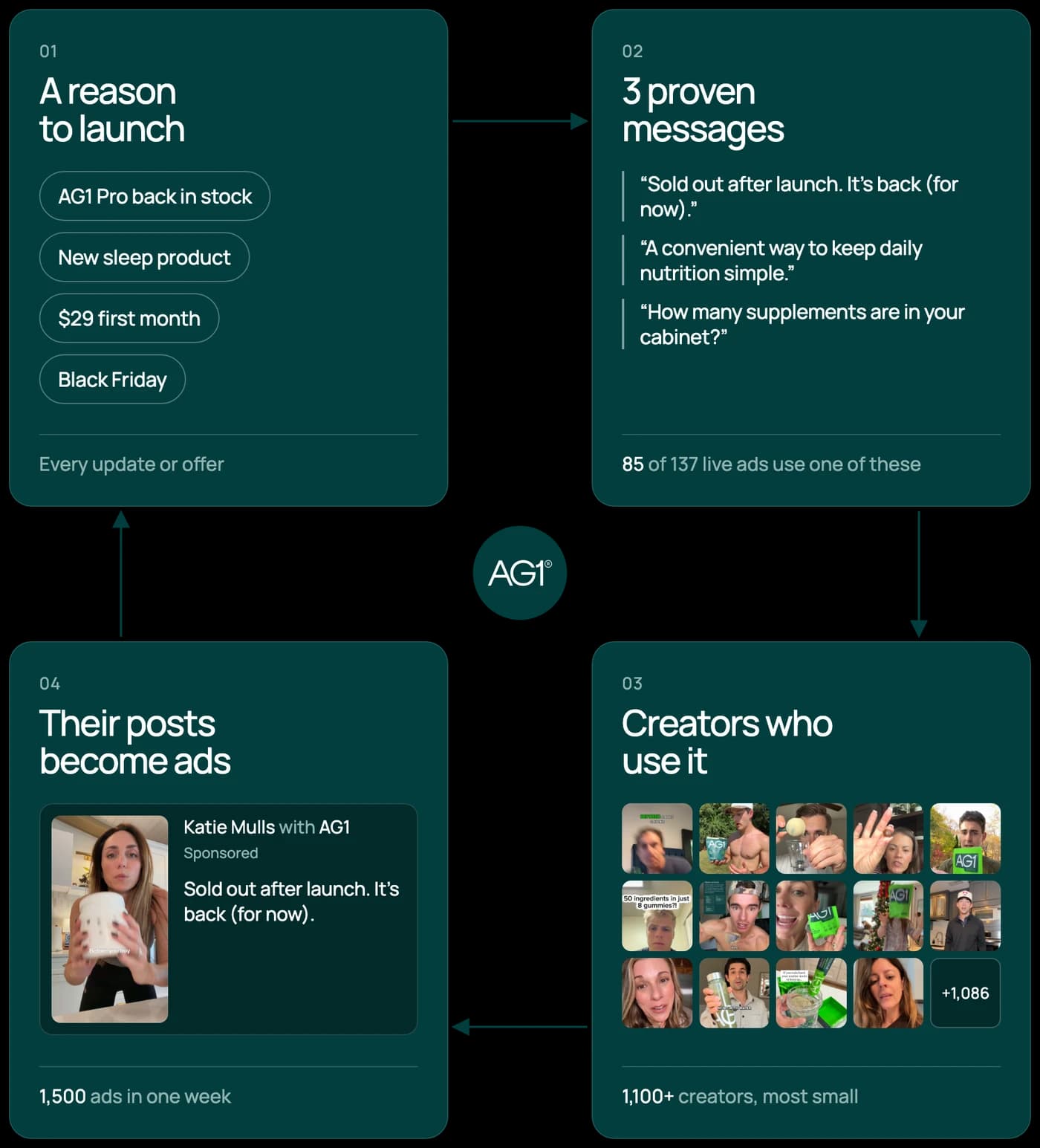
AG1 launched about 1,500 new Meta ads last week. That sounds like the output of a 100-person creative team. It isn't. AG1 has around 480 people on LinkedIn, and only about 80 of them work in marketing.
We tracked every AG1 ad in Lemonado, which pulls its data straight from the Meta Ad Library. The short version: AG1 pushes the same three messages over and over, through a huge network of creators who actually use the product. The 1,500 ads aren't 1,500 ideas. They're a few messages, voiced by hundreds of real people, launched by a system that takes seconds.
This guide breaks down what they launched, how they produce that volume, what their ads reveal about their positioning, and what you can copy at any budget.
The numbers
Here's what AG1's Meta account looked like in the week of November 2–8, 2026:
New AG1 ads per week
1,495new ads in the week of Nov 2
- ~1,500 new ads in one week. Lemonado logged 1,495 new ads in the week of November 2.
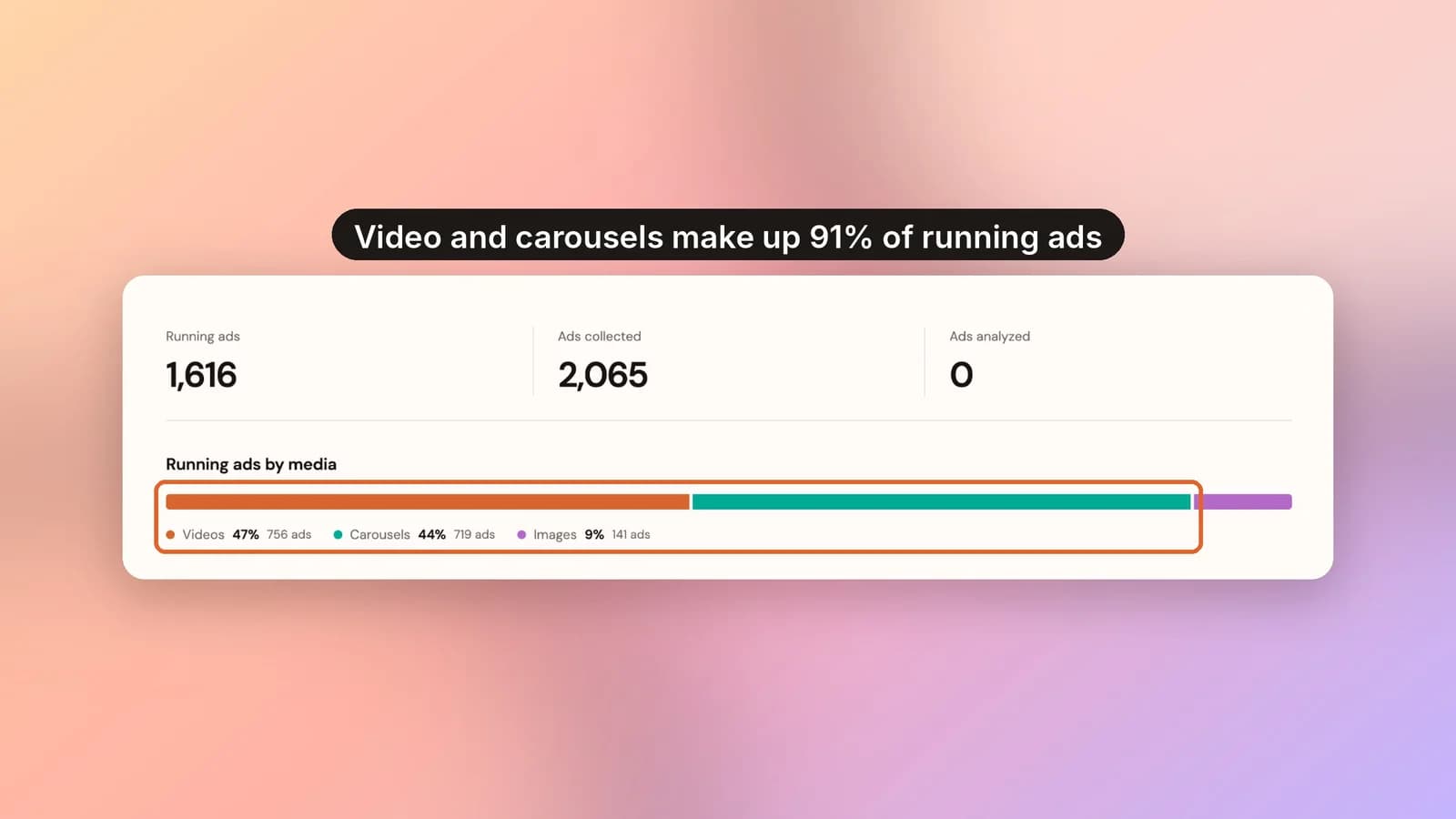
- About 1,600 ads running at the same time. Lemonado showed just over 1,600 live ads.
- Video 47%, carousel 45%, image 9% of running ads.
- Only 55 different opening lines across the new ads from November 2–7. The top three messages cover 63% of them.
- 35% of new ads ran from a creator's handle as Meta partnership ads.
- One batch of 50+ ads was created within 10 seconds. Nobody clicks "duplicate" that fast.
- Sunday was one push: almost 300 new ads, nearly all carrying the same AG1 Pro restock copy.
What they launched last week (nothing new)
Here's the surprising part: no new product launched. AG1 took products it already had and gave each one a reason to buy now.
- AG1 Pro restock (scarcity). AG1 Pro launched in June and sold out. The ads say "Sold out after launch. It's back (for now)", with the headline "Get it before it's gone again". That one sentence carried Sunday's push.
- Essentials Gummies (an easy, cheap start). "1 daily pack. 50 ingredients. 5g fiber." and "A convenient way to keep daily nutrition simple", with a $29 first-month offer. This was about 40% of the week's new ads.
- AG1 Next Gen (Black Friday). "Feeling the slump?" and "How many supplements are in your cabinet right now?", plus a Black Friday deal.
Three products, three hooks, each aimed at a different buyer: gym-goers who already take creatine, newcomers who don't want a green drink, and the core customer. Everything else is variation on those three.
How AG1 makes so many ads
1. One message, many faces
AG1 writes one approved block of copy per push: the claims, the emoji bullets and the FDA disclaimer every supplement ad needs. Then they attach dozens of different videos to it, each as its own ad.
Take seven ads from the same AG1 Pro batch: four ran from four different creators' handles (qstewart0, Trent Project Man, Jon Perdue YouTube and kevinkogut_), with identical text and video lengths from 26 seconds to over a minute. The words stay the same, and the face, voice and setting change. That matters because Meta's delivery system groups near-identical ads together. Different people count as different ads. Recoloured copies don't.
2. A creator engine that took 15 years to build
The volume comes from a network AG1 started building in 2010:
- One rule from day one: you only get paid to promote AG1 if you already use it. Podcast hosts don't read a script. They describe their own mornings.
- Podcasts built the brand. AG1 sponsored 88 episodes of The Tim Ferriss Show, 35 of the first 75 Huberman Lab episodes and 38 of Lex Fridman's.
- Today it's mostly small creators. CreatorDB tracks 1,100+ creators and 4,200+ sponsored posts on YouTube alone, and a third of AG1's partners average 10K–50K views.
- Everyone is tracked. Each creator gets their own link, code and landing page, and deals are performance-based. AG1 knows exactly who drives subscriptions.
- It's run as its own team. AG1 has a Director of Creator Partnerships + Affiliates who runs affiliate, social commerce and creator partnerships as one function.
Paid social is the last step. The best creator clips are already licensed, so they become Meta partnership ads with no new production needed.
3. Launching in bulk
Within one batch, the creation times run from 22:41:21 to 22:41:31 on a Sunday night: more than 50 ads in 10 seconds. That's a script or a bulk tool reading a folder of approved videos and building one ad per clip with the same copy and link. Once launching takes seconds, the only limit on volume is how many good clips you have.
4. Catalog ads that run for months
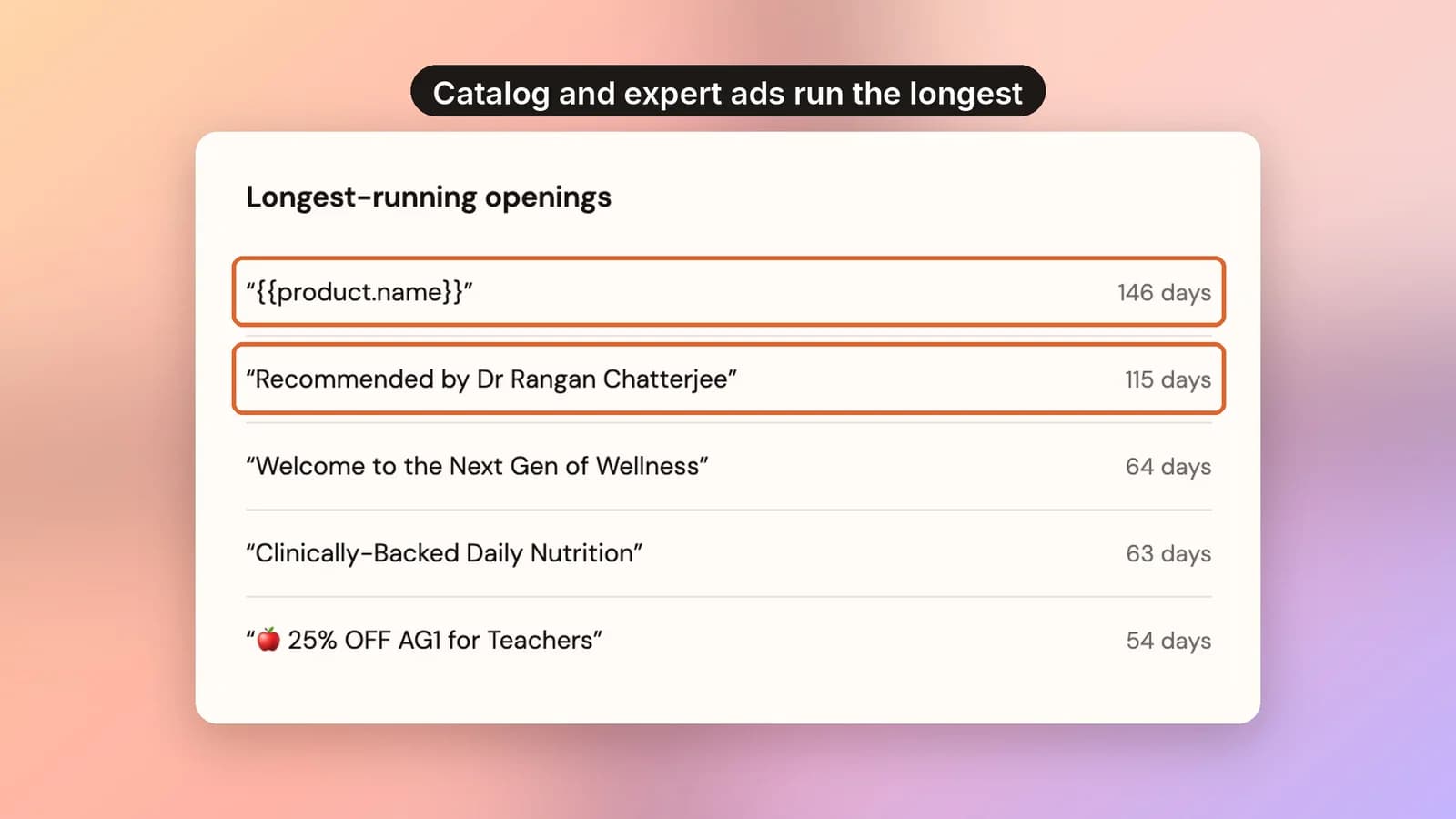
About 45% of AG1's running ads are carousels, and the longest-running ads in the account open with a product-feed template. These dynamic catalog ads have been live for up to 146 days. They cost almost nothing to make, and with more products in the range (Next Gen, Pro, Gummies, travel packs, AGZ), the catalog keeps producing new combinations on its own.
5. A reason to act now, every week
AG1 doesn't wait for a new product to justify a big push. Over 2026 the moments were Hugh Jackman as ambassador in January, Target in April, AG1 Pro in June, Gummies in August, and the Pro restock plus Black Friday in November. In a quiet week, "back in stock" or "$29 first month" is enough of a hook.
What their ads reveal about AG1's positioning
Ad volume is the headline, but the bigger value of tracking a competitor's ads is what they show about strategy. Lemonado surfaces this straight from the ads:
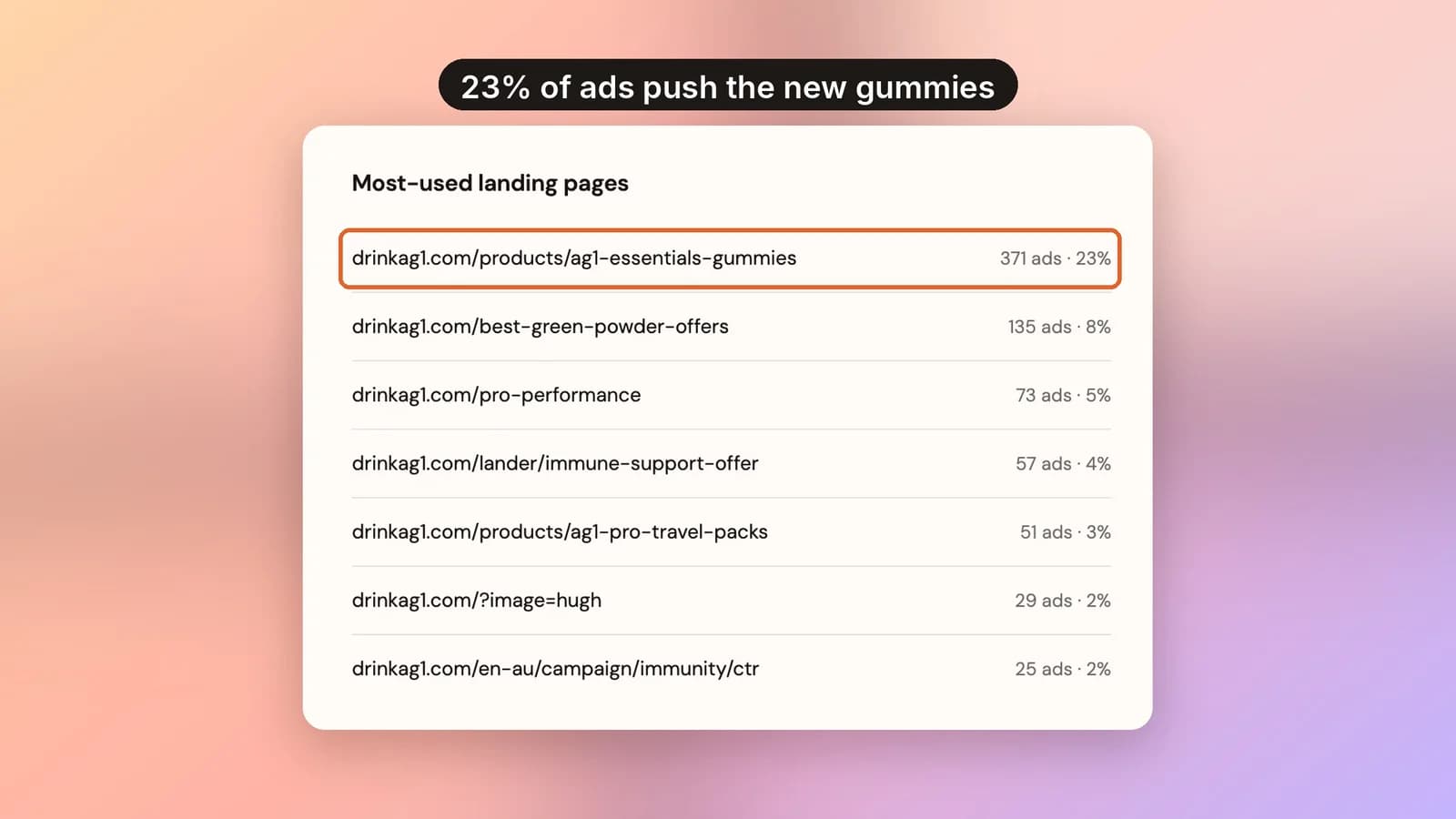
- Where they send traffic shows where they're betting. 23% of running ads (371) go to the Essentials Gummies page, more than to any other page. AG1 is clearly using gummies to reach people who never wanted a green drink.
- The words they repeat are the positioning. "Daily" appears in 1,337 ads, "gut health" in 925 and "backed" in 912. AG1 is selling a daily ritual backed by science, not just a supplement.
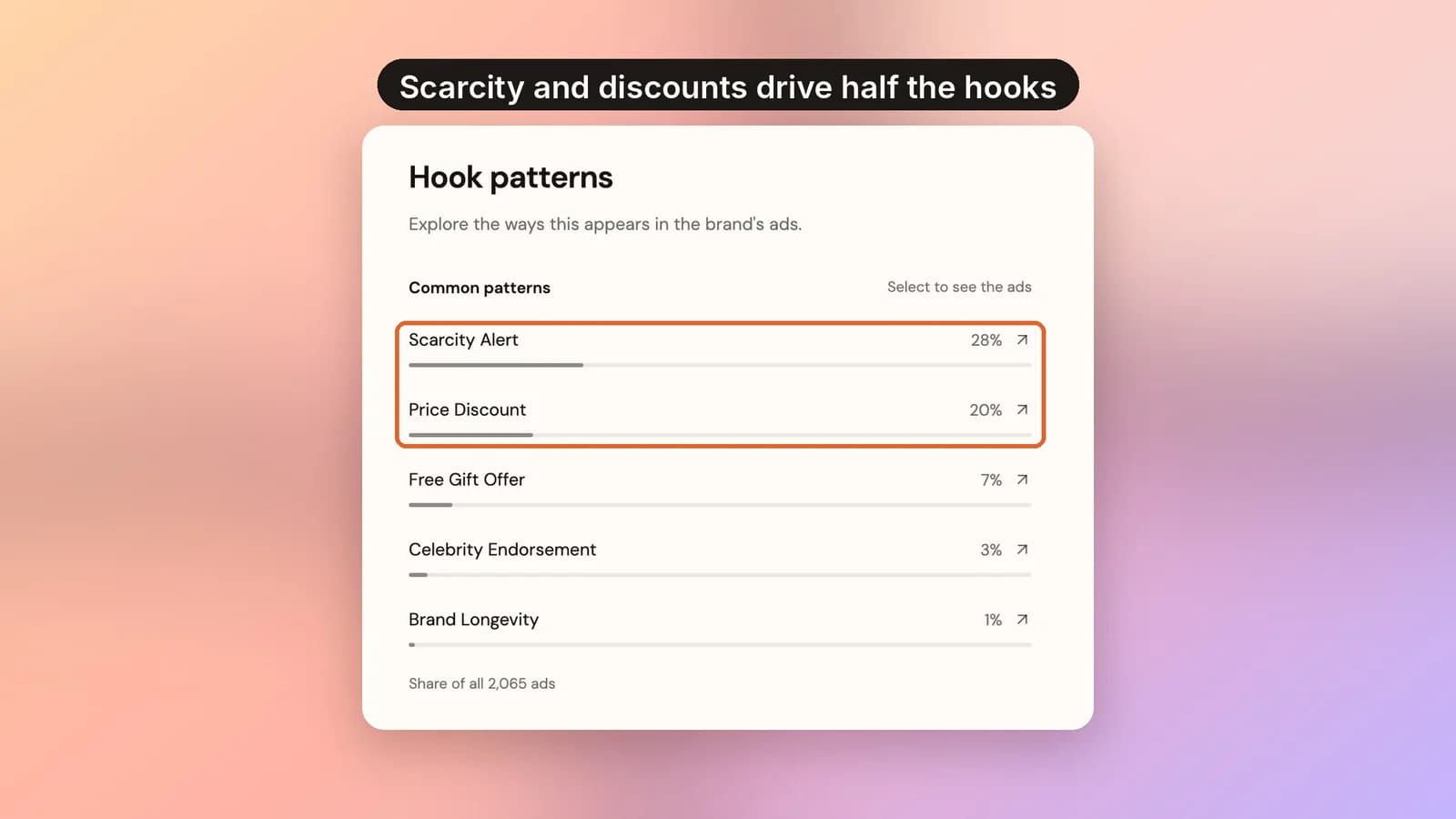
- Their hooks show how they close. Scarcity is the hook in 28% of all ads, a price discount in 20%, a free gift in 7% and a celebrity in 3%. Urgency does most of the work.
- What runs longest shows what works. Besides the catalog carousels, the longest-running ad is "Recommended by Dr Rangan Chatterjee" at 115 days. Expert trust keeps earning its place.
- Landing pages show who they're targeting. Separate pages for AG1 Pro buyers, GLP-1 users, teachers, Hugh Jackman fans and Australia. Every angle gets its own page.
Put together, AG1's positioning reads clearly: one simple daily habit that replaces your supplement cabinet, proven by science and by people you trust. And they're widening the funnel at both ends, with Pro for the gym crowd and Gummies for beginners.
How AG1 got here
- 2010: Chris Ashenden starts Athletic Greens in New Zealand. Tim Ferriss mentions it, unpaid, in The 4-Hour Body.
- ~2012: Podcast sponsorships begin. Ferriss later becomes an investor.
- 2010–2021: About 11 years bootstrapped, with one product sold almost entirely by subscription, reaching about $150–160M in revenue.
- 2022: Raises $115M at a $1.2B valuation and rebrands to AG1.
- 2024: Kat Cole becomes CEO. The company says it's profitable at around $600M revenue.
- 2025–2026: Clinical trials, retail (Amazon, Costco, Target), Hugh Jackman, AG1 Pro and Essentials Gummies.
The 1,500 ads a week is the visible part. Fifteen years of relationships with people who genuinely use the product is what makes it possible.
What you can take from this
You don't need 1,000 ads a week. You need the system behind them:
- Recruit people who already use your product, not the biggest audience you can afford. Small, real creators beat polished reads.
- Give every partner their own link and pay on results, so you know which voices actually drive sales.
- Lock one message per push and let the faces carry the variety. 10–20 genuinely different videos behind one sharp message beats 100 recoloured versions.
- Make launching an ad take seconds, not hours. If building ads is manual, volume will always be your ceiling.
- Give people a reason to act now every week: a restock, an entry offer, a season. It doesn't have to be a new product.
- Judge winners by how long they stay live, and make more of what keeps running.
How we ran this analysis in Lemonado
Everything above started with a few clicks. Here's the workflow:
- Add the brand as a competitor. In Lemonado's Ads section, add AG1 under Competitors. Lemonado collects every ad they run and checks for new ones automatically. For AG1 that's 2,065 ads collected and 1,602 running.
- Open Analytics. You see new ads per week (that's where the 1,495 jumped out), the format mix, the landing pages they send traffic to and the words they repeat most.
- Check Hooks and Ad breakdown. These show the hook patterns behind the ads (scarcity, discount, free gift, celebrity) and which openings have run longest.
- Look at Landing Pages and Gaps. Where they send traffic, and the angles they aren't covering. Use Compare to put their ads side by side with yours.
- Ask AI for the "why". Ask follow-up questions about the ads in plain language, for example which messages they push hardest or what changed this week.
Lemonado pulls all of this from the Meta Ad Library and sorts ads by the date they started running, so you see what a brand actually launched each week, not just what happened to be live.
The result is a full picture of a competitor's positioning (what they say, who they target, what they push hardest) in minutes instead of a week of screenshots.
Notes on the data
Lemonado's ad data comes from the Meta Ad Library, which doesn't show spend or results for non-political ads, so "running a long time" is the best available sign of a winner, not proof. Headcounts are self-reported on LinkedIn, and AG1 also uses outside agencies, so more people work on these ads than the 80 in marketing. Podcast episode counts come from a public newsletter analysis and reflect AG1's history, not current activity.